Saturday, March 26, 2011

Drawing the graphs

Graph #1  d/t

v/t


Graph #2 D/t

v/t

Graph #3v/t d/t
Graph #4v/t

d/t

a/t


Graph #5d/t
v/t

Walking the graphs

Again, this probably was the most effective way to start a new chapter :)
This lab helped me understand the real motion behind the science of motion.
Probably the most fundamental knowledge that is important to later studies.

I definitely learned a lot from this activity, from how a motion sensor works, to how to plot a graph with the change in speed and distance.
I personally think these activities help me understand the physics behind the math, and its a awesome way to understand the concept before applying them.

Looking forward to more labs!!!!!!!!!!!

Saturday, February 26, 2011

Right Hand Rules.

Based on Oersted's principals of current and magnetic field, three right hand rules can be applied to help us understand some concepts. Firstly, we must understand that all right-hand rules are based on the concept of conventional current, which is the movement of protons from positive to negative. If electron flow is considered, the same results can be obtained by using the left-hand rule.

Right-hand Rule #1


 Right-hand rule number one states the relationship between the direction of current flow and the direction of the magnetic field generated as a result. Given either one of the variables, the other can be determined.
Taking the above diagram as example, the direction of the thumb pointing at represents the direction of the current. The direction of the fingers holding the conductor therefore represents the direction of the magnetic field.

Right-hand Rule #2


The right-hand rule explains the concept when a conductor is coiled around a metal, magnetizing the metal.  In this case, the fingers will point to the direction of current flow, and the thumb will reveal the north of the magnet.

Saturday, February 19, 2011

Concept Map + must knows for electricity

This is the concept map  we created to summarize this entire unit :) Below lists some of the most important terms you must know for this unit.

Series Circuit - a complete circuit with all the loads/resistors connected in a                                                   continuous connection, if one load/point is removed or damaged, the entire circuit fails.

Electron Flow - the flow of electrons (-) in a circuit from the negative terminal to the positive terminal.

Conventional Current - the flow of protons (+) from the positive terminal to the negative terminal.

Coulombs (Q) - the measurement of the number of electrons, in the unit of C

Current (I)- the measurement of electron flow using an ammeter in the unit of A (Amperes)
in the formula I= Q/t

Voltage(V) - a measurement of electric potential energy between two points in the unit of V (Volts). This        is calculated by the formula V= E/Q, where E is the energy required to increase the electric potential of a charge, Q.

Resistance (R) - is the measurement of the opposition to flow, measure in the unit , this is calculated by the formula R = V/I.

Ohm's Law - this law presents a significant relationship between resistance, voltage, and current. Voltage and current displays a linear relationship to each other, and the slope remains constant in the same graph. The slope is the resistance of a circuit, which do not change under variations of voltage/current.

Kirchhoff's current law - The total amount of current into a junction point of a circuit equals the total current that flows out of that same junction.
Kirchhoff's voltage law -  The total of all electrical potential decreases in any complete circuit loop is equal to any potential increases in that circuit loop.

Power - the rate which work is being down, can be calculated by the equation P = IV


Friday, February 11, 2011

Ohms vs. Kirchhoff

Ohm's Law
Ohm's Law states that the current flowing through an conductor between two points is proportional to the potential difference (V) between the two points.The relationship between the two will show an linear relationship (seen above). Where the increase of Current results in the increase in Voltage. Ohm's also states that resistance, will stay constant regardless of the change in current or voltage.
Resistance - opposition to the flow of electrons.
The formula purposed to represent this relationship is R= V/I

Kirchhoff's laws
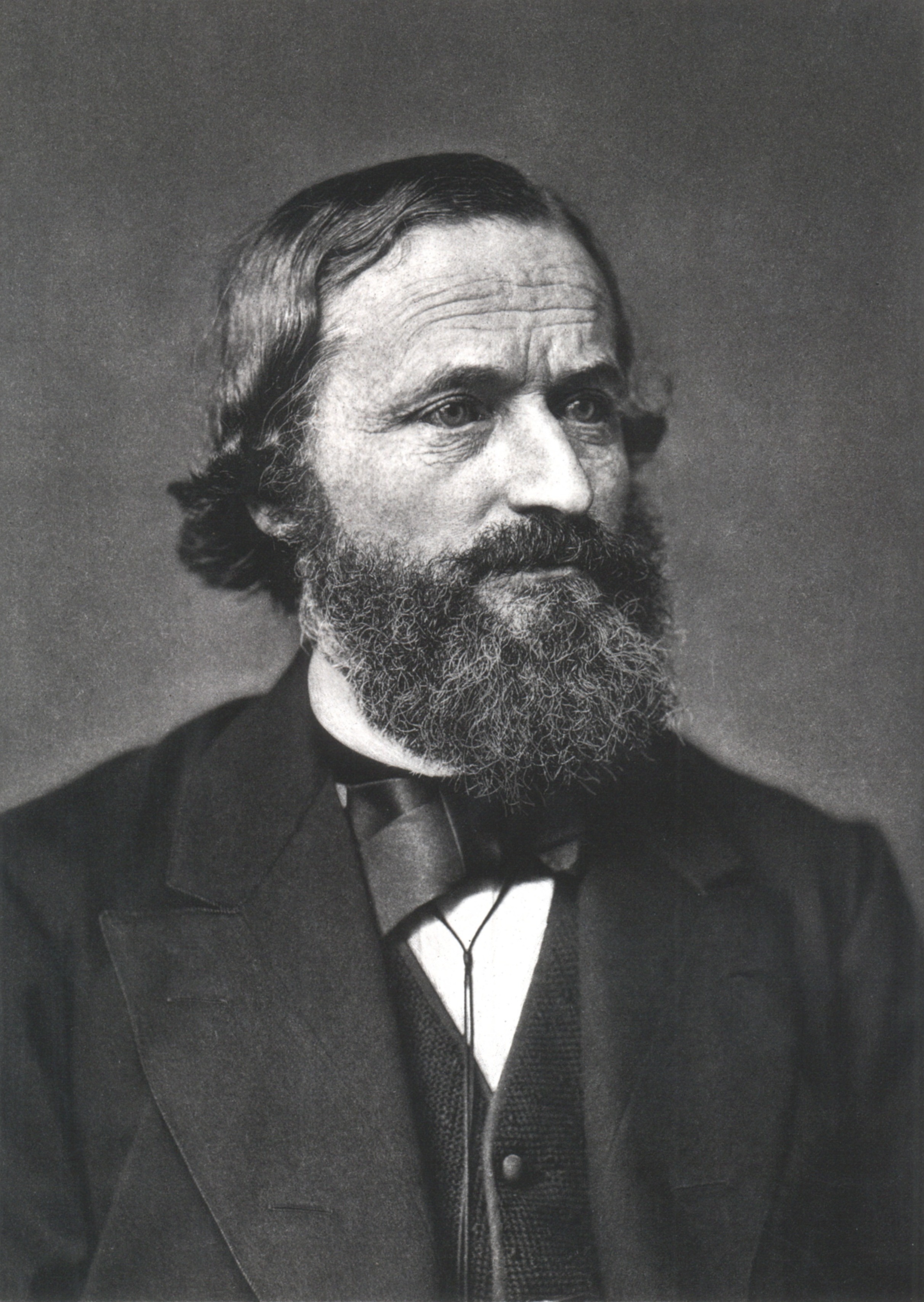
Kirchhoff, a brilliant German physicist takes on Ohm's law and expands it into another concept within the circuit. The six laws he purposed presents the relationship in Current/Voltage/Resistance between all the loads in a single circuit.

 Parallel Circuits  
The first law states that the total current (number of electrons) of a circuit equals to the sum of the current of all the loads.                                                        


1. It = I1 + I2 + I3 + .. In
The second law states that the voltage (potential difference) of all the loads within a circuit will equal to each other. 
2. Vt = V1 = V2 = V3
The third law represents the relationship in resistance (opposition to electron flow) between the loads within a circuit.
3. 1/Rt = 1/R1 + 1/R2 + 1/Rn
Series Circuits
The first law in the series circuit states that the current measured in each load within a circuit will equal to each other.
1. It = I1= I2= I3= In
The second law states that the total voltage in a series circuit is the sum of the voltage of all the loads.
2. Vt = V1 + V2 + V3 + Vn
The third and final law states that the total resistance of a series circuit equals to the sum of all loads' resistance. 
3. Rt = R1 + R2 + R3 + Rn 


Wednesday, February 9, 2011

Favourite Rollercoaster :P

Despite of the magnificent amount of physics and mathematics behind a roller coaster, its still a ton of fun riding on one :).
So.. down to the point, my favorite  roller coaster "SO FAR" is the Behemoth (hey, I know I haven't been to any amusement park outside of Canada yet, but that's not the point), it's still the fastest and highest coaster in Canada right? And, just for the fact that I am a proud Canadian. At you go down the first and the highest hill, its such an amazing experience, and the fact that you can't visually see the tracks on the top just makes it more thrilling. For those of you who are in fear of roller coasters, don't be scared, because your fear is the most fun part after you step out of the coaster. And since we are physicist, you can always take out your calculator and see you wont fall out of it. right? :)